BLINK! THINK! DECIDE!
Shri Manish Tiwari is a forceful orator. He is also a consummate liar. He lies by telling half truth. He is also an accomplished lawyer practicing in Indian courts. He either does not read English or he does not understand the language. His statements in the Press Conference accusing Anna Hazare of being submerged in corruption are more than objectionable because they are insults heaped upon the CITIZEN of India.
Let me say here at the very outset that the Constitution of India which is paraded as sacrosanct and supreme is neither sacrosanct nor supreme. It has been altered amended and changed more times than any other constitution in the world. It has even been made toothless. What we forget and what we must remember is that in the Republic of Bharat it is the citizen that is supreme and also sacrosanct because it he in his collective incarnation of WE THE PEOPLE created the constitution.
Dr Manmohan Singh is a Prime Minister that has been loaded on to the Indian people by a handful of his cronies. He has been imported into the cabinet via the Rajya Sabha. So the claim that he is the prime minister of 121 crores of Indian people is a lie. Shri Tiwari please note.
The Justice Sawant Commission Enquiry that was brandished in the Press Conferences had been rendered to a naught by the Sukhtankar Committee. Shri Tiwari lied to the nation by implication because he did not mention the deliberations of the Committee.
If the CITIZEN of Bharat is not given the respect he deserves by the public servants he has chosen to serve his ends – and the prime minister is the first amongst the equal public servants – then nothing deserves any respect whether it is the prime minister or the tricolour – which again happens to be the creation of the citizen – nor Parliament nor the parliamentarians.
First learn to respect the citizen of Bharat. Then and only then will the politicians deserve to ask for respect.
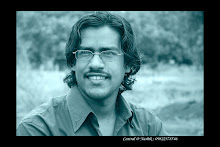
--Pyare Shivpuri
Showing posts with label Pyare Shivpuri. Show all posts
Showing posts with label Pyare Shivpuri. Show all posts
Sunday, August 14, 2011


Sunday, February 13, 2011
The sanctimonious are far too vulnerable...Dacoity by The Law Book


Dacoity by The Law Book!
I know a Person of Indian Origin named Pyare Shivpuri. I have fed him several times at my café in Nashik. He came to Nashik in connection with his dealings with the Maharashtra State Co-operative Bank Limited. I did not believe him when he told me that to his amazement he had discovered that MSCB was a bunch of crooks supported by the State of Maharashtra and by Sharad Pawar. I probed further and the narrative that emerged was something like this.
Around 40 kilometres NW from Nashik there is Pimpalgaon. In 1989 one Madhavrao Khanderao More established a co-operative venture there and called it Nashik District Co-operative Grape Sparkling Wine and Bye-Products Karkhana Limited which was later christened Pimpane Co-operative India Limited; raised over a crore of rupees in share capital from 3,996 farmers in the Niphad-Dindori area by making promises that he knew he could not keep; acquired the patronage of Sharad Pawar; purchased some land in Pimpalgaon valued at Rs. 47,000/= (forty seven thousand); applied to the Industrial Finance Corporation of India (IFCI) and the Maharashtra State Co-operative Bank Limited (MSCB) for a loan of Rs. 30,000,000/= (three crores) bifurcated equally between the two institutions by depositing with IFCI the title deed of the land valued at Rs. 47,000/= and obtained that loan.
MSCB, later on, took over the entire responsibility of the loan and on 31st March 2005 borrower Pimpane owed to MSCB a neat sum of Rs. 271,029,000/= (twenty seven crores ten lakhs twenty nine thousand). Considering this background, it is not difficult to conclude that MSCB colluded with Shri More to create a NPA from the very start. Pimpane ceased production in 1993. Then in 2002 Securitization Act was enacted by Parliament in New Delhi. It gave ‘secured creditors’ the liberty of annexing the property of defaulting borrowers without having to go through the lengthy procedure of a Civil Court. MSCB took over the Pimpalgaon property of Pimpane around 2004 and since then has sold it to three different buyers; Pyare Shivpuri was the first one.
Now, the legal issues are whether:
(i) MSCB loan to Pimpane was a “secured loan”?
(ii) MSCB had the right to take possession of Pimpane property under the Act of 2002?
(iii) Pyare Shivpuri was right in demanding proof of ‘clear title’ of the property he was buying from MSCB?
The take over of Pimpane by MSCB is ‘dacoity’ – theft accompanied by force, in this case not a gun but a law book not the law but a law book. The 77 directors of MSCB – elected and nominated – including the present Deputy Chief Minister of Maharashtra, Ajit Pawar, the nephew of Sharad Pawar are vicariously guilty of various items of fraud proscribed by IPC.
This little scam may look insignificant in the light to Delhi disclosures but for a Bank!
http://www.moneylife.in/article/78/9431.html
BLINK! THINK! DECIDE!
Friday, February 11, 2011
Maharashtra’s apex co-operative bank in financial turmoil - Moneylife Personal Finance site and magazine
Maharashtra’s apex co-operative bank in financial turmoil - Moneylife Personal Finance site and magazine
Do you want to clean this mess?
You might like this, even the best and the biggest falter...leaders failed!
BLINK! THINK! DECIDE!
Do you want to clean this mess?
You might like this, even the best and the biggest falter...leaders failed!
BLINK! THINK! DECIDE!
Thursday, November 20, 2008
THE ULTIMATE UNTOUCHABLE OF THE TWENTIETH CENTURY
THE ULTIMATE UNTOUCHABLE OF THE TWENTIETH CENTURY
Pyare Shivpuri
Mohandas Karamchand Gandhi, Bapu to millions of Indians, a Mahatma or Saint of modern times, was hit by an assassin's bullets in the Birla Temple Grounds in New Delhi on 30th January 1948. He did not die then. He is being killed off now. Slowly. Pacifists all over the world and particularly in India get together to pay homage to Gandhiji but the voice that once spoke for "the conscience of mankind" is muted in the cacophony of tripe tributes paid to him from a variety of platforms and the shrieks of pure terror heard from every devastated hamlet where the harijans have been harassed, molested or killed. We are proving once again that man can live without food or faith but not without a tangible god. And we are manufacturing a tangible god, though an utterly untouchable one, out of a perfectly touchable man. Gandhiji dedicated his life to eradication of untouchability of all kinds. In his death, he seems to have been made the ultimate untouchable of the twentieth century.
Gandhiji had built up a fairly remunerative law practice in South Africa but success as 'lawyer' eluded him. He realised that his role was not that of a custodian of statutes but that of a champion of justice. On his return to India, he marched to Dandie in contravention of the Salt Act, not merely because he was defying the might of the British Empire but because he was formulating a political device that an ordinary citizen anywhere could understand and accept. When he propounded the widespread use of the spinning wheel, he wasn't even remotely suggesting the closure of textile mills in the country. He was creating an equation between eternal motion and a measure of usefulness in the society. He had understood very clearly the difference between "power" and "strength" and was convinced that wherever and whenever "power" is confronted with "strength" the former loses out in the long run. Non‑violence in principle ‑ and civil disobedience or passive resistance, in practice ‑ was a strategy devised to confront the foreign ruling power with the strength of the natives. This very strategy has since been used in various parts of the world against oppression of all kinds. It is being used now in Poland, testing the very structure of Communist System. Yet, a dispassionate study of the principles of passive resistance reveals that it is a rather unfair game. In essence it is like this. "I will not strike at you. Never. But I shall provoke you to murderous rage. So provoked, when you aim your guns at me, the world will condemn you as the tyrant and bestow upon me the benefit of its benevolence".
Gandhiji's design for struggle for independence in India was an economic necessity. The Indian society could not support an armed wing of freedom fighters. An armed uprising against the British rule would not only have destroyed the momentum of the struggle, it would have become an elitist movement excluding the farmer and the labourer, that is to say 75% of India's population. As a non‑violent protest it has been the most popular movement in human history ‑ even more so than the French and the Russian revolutions. Gandhiji successfully confronted the foreign power that ruled over India. He hit them. He hit them hard. He even hit them below the belt. And then, in his characteristic generosity, forgave them their pain. But he could not appease the violence inherent in the Indian society. He reached out to the Hindus and the Moslems alike but could not bring their leadership together. He did not like the idea of partition and would have gladly accepted Mr Jinnah as the first Prime Minister of a free re-united India. As a matter of fact that move would have torpedoed the two nation theory. If a Moslem Prime Minister of a predominantly Hindu India had failed, nobody would dare raise the demand for Pakistan. On the other hand, if he made a success of the high office, nobody would care to do so. The economic considerations of authority for which the leaders of the Indian National Congress had indeed worked hard and waited long were within their easy reach. As long as Gandhiji merely theorised about the sacrifices that were necessary to carve a new destiny for an ancient land, he was loved and revered. When the time came and Gandhiji insisted that those sacrifices be actually made, he was cast aside. He accepted the partition as a bitter reality but on 15th August 1947, when the leaders of the Indian National Congress were rejoicing in the transfer of power New Delhi he was not even on the soil of free India.
The Indian National Congress was not designed as a political party. It was a forum for expression of Indian aspirations. Gandhiji had realised only too clearly that after independence, the Congress could not go on effectively representing the landlord and the tenant, the industrialist and the worker simultaneously. He advised that the Congress ought to be dissolved with the coming of independence. Fresh blood and new ideas were needed for the new era. He warned that if the Indian National Congress is not dissolved honourably and honestly, it will become stagnant and putrefied; it will be torn by factionalism, defections and dishonest intentions; it will perpetuate the cult of personality and come to a disastrous end with dire consequences for the whole country. Events have proved how right he was.
Gandhiji was not against industrialisation or modernisation. But he did not equate progress with it. He wanted India to be an agricultural king rather than remain an industrial beggar. He said that an inappropriate and indiscriminate development policy for the nation will rob the Indian of his self‑respect. Economic equations in India, he said, could only be built on the foundation of village industries. He knew that, the control of economic power requires clarity of vision. His lieutenants ‑ noble and genuine patriots all ‑ lacked that clarity. Slogans of progress had brought them the adulation of ever increasing Indian masses. Lost in that adulation and lost without the clarity of vision, the hub of leadership of the Indian National Congress became a centre of intrigues and conflicts. As a result an appropriate economic policy for the country could not be formulated. Today, Chief Ministers of many States are accused of corrupt practices ‑ one among them having been found guilty in a Court of law and having had to resign. Corruption is accepted as a part of the national fibre and nothing, but nothing, in India moves without a licence. And licence laws breed further corruption.
The advance of a capitalist industrial society creates a few very rich and many too poor to feed themselves. When such a stage is reached a movement for reform arises amongst the poor, sometimes with destructive outbursts. Gandhiji wanted to avoid wastage of national energy in that eruption. He insisted that the Indian should go back to the villages because, he explained, the solutions for the problems of the Indians as distinct from the problems of India could only be found in rural cooperation; in an environment of equality and openness. He recognised very early on the potential that lay locked in the untouchable of India. He also realised the explosive nature of conflict that would arise as the nation advanced on the road of industrialisation. He gave them a brand new name ‑ the harijan, children of god. He espoused their cause. He advocated the removal of stigma attached to the harijan. This process could release their locked energies, bring them into the mainstream of India's national efforts and eliminate the internal dissentions of the Hindu society.
The leaders of the government and the society set out to make laws banishing the practice of untouchability but did not make provisions for their effective application. Law is like a railway track. It does not move itself though it does make the movement of a train possible. The presence of the track, in itself, is no guarantee that the train will move. The Constitution outlaws the practice of untouchability but there is yet no social acceptance to enforcing that right. The Adult franchise gave to the harijan a powerful weapon ‑ the vote. It also provided the politician with a brand new method of manipulating the harijan population. Almost all of those politicians were people blessed with robust conscience and a hunger for justice. Almost all of them believed in social position, comfort and rich feeding. They were the kind of people who never become the salt of the earth but they do remain the substance of civilisation. And they save the society from criminals and conquerors. They also inflict upon the society immediately surrounding them a personal brand of morality. Gandhiji was aware of all this and saddened by it. I wonder what a sad man he must have been, when he was assassinated. Today, on the one hand, we proclaim him to be a Mahatma ‑ a Saint. On the other hand we inflict untold miseries on the harijan whose cause he espoused with all his might. In another fifty or perhaps a hundred years we will call him an incarnation of god. Another Christ, perhaps. One single atonement for an era full of sins and wrongs. We attribute extra qualities to Gandhiji because we have neither the tenacity to acquire his courage nor his courage to acquire tenacity. We dare not criticise him lest we should reveal how fragile our own structures are. Perhaps it is the tragedy of such a touch‑stone to become and remain the ultimate untouchable.
Cambridge, UK.
22nd January 1982.
Pyare Shivpuri
Mohandas Karamchand Gandhi, Bapu to millions of Indians, a Mahatma or Saint of modern times, was hit by an assassin's bullets in the Birla Temple Grounds in New Delhi on 30th January 1948. He did not die then. He is being killed off now. Slowly. Pacifists all over the world and particularly in India get together to pay homage to Gandhiji but the voice that once spoke for "the conscience of mankind" is muted in the cacophony of tripe tributes paid to him from a variety of platforms and the shrieks of pure terror heard from every devastated hamlet where the harijans have been harassed, molested or killed. We are proving once again that man can live without food or faith but not without a tangible god. And we are manufacturing a tangible god, though an utterly untouchable one, out of a perfectly touchable man. Gandhiji dedicated his life to eradication of untouchability of all kinds. In his death, he seems to have been made the ultimate untouchable of the twentieth century.
Gandhiji had built up a fairly remunerative law practice in South Africa but success as 'lawyer' eluded him. He realised that his role was not that of a custodian of statutes but that of a champion of justice. On his return to India, he marched to Dandie in contravention of the Salt Act, not merely because he was defying the might of the British Empire but because he was formulating a political device that an ordinary citizen anywhere could understand and accept. When he propounded the widespread use of the spinning wheel, he wasn't even remotely suggesting the closure of textile mills in the country. He was creating an equation between eternal motion and a measure of usefulness in the society. He had understood very clearly the difference between "power" and "strength" and was convinced that wherever and whenever "power" is confronted with "strength" the former loses out in the long run. Non‑violence in principle ‑ and civil disobedience or passive resistance, in practice ‑ was a strategy devised to confront the foreign ruling power with the strength of the natives. This very strategy has since been used in various parts of the world against oppression of all kinds. It is being used now in Poland, testing the very structure of Communist System. Yet, a dispassionate study of the principles of passive resistance reveals that it is a rather unfair game. In essence it is like this. "I will not strike at you. Never. But I shall provoke you to murderous rage. So provoked, when you aim your guns at me, the world will condemn you as the tyrant and bestow upon me the benefit of its benevolence".
Gandhiji's design for struggle for independence in India was an economic necessity. The Indian society could not support an armed wing of freedom fighters. An armed uprising against the British rule would not only have destroyed the momentum of the struggle, it would have become an elitist movement excluding the farmer and the labourer, that is to say 75% of India's population. As a non‑violent protest it has been the most popular movement in human history ‑ even more so than the French and the Russian revolutions. Gandhiji successfully confronted the foreign power that ruled over India. He hit them. He hit them hard. He even hit them below the belt. And then, in his characteristic generosity, forgave them their pain. But he could not appease the violence inherent in the Indian society. He reached out to the Hindus and the Moslems alike but could not bring their leadership together. He did not like the idea of partition and would have gladly accepted Mr Jinnah as the first Prime Minister of a free re-united India. As a matter of fact that move would have torpedoed the two nation theory. If a Moslem Prime Minister of a predominantly Hindu India had failed, nobody would dare raise the demand for Pakistan. On the other hand, if he made a success of the high office, nobody would care to do so. The economic considerations of authority for which the leaders of the Indian National Congress had indeed worked hard and waited long were within their easy reach. As long as Gandhiji merely theorised about the sacrifices that were necessary to carve a new destiny for an ancient land, he was loved and revered. When the time came and Gandhiji insisted that those sacrifices be actually made, he was cast aside. He accepted the partition as a bitter reality but on 15th August 1947, when the leaders of the Indian National Congress were rejoicing in the transfer of power New Delhi he was not even on the soil of free India.
The Indian National Congress was not designed as a political party. It was a forum for expression of Indian aspirations. Gandhiji had realised only too clearly that after independence, the Congress could not go on effectively representing the landlord and the tenant, the industrialist and the worker simultaneously. He advised that the Congress ought to be dissolved with the coming of independence. Fresh blood and new ideas were needed for the new era. He warned that if the Indian National Congress is not dissolved honourably and honestly, it will become stagnant and putrefied; it will be torn by factionalism, defections and dishonest intentions; it will perpetuate the cult of personality and come to a disastrous end with dire consequences for the whole country. Events have proved how right he was.
Gandhiji was not against industrialisation or modernisation. But he did not equate progress with it. He wanted India to be an agricultural king rather than remain an industrial beggar. He said that an inappropriate and indiscriminate development policy for the nation will rob the Indian of his self‑respect. Economic equations in India, he said, could only be built on the foundation of village industries. He knew that, the control of economic power requires clarity of vision. His lieutenants ‑ noble and genuine patriots all ‑ lacked that clarity. Slogans of progress had brought them the adulation of ever increasing Indian masses. Lost in that adulation and lost without the clarity of vision, the hub of leadership of the Indian National Congress became a centre of intrigues and conflicts. As a result an appropriate economic policy for the country could not be formulated. Today, Chief Ministers of many States are accused of corrupt practices ‑ one among them having been found guilty in a Court of law and having had to resign. Corruption is accepted as a part of the national fibre and nothing, but nothing, in India moves without a licence. And licence laws breed further corruption.
The advance of a capitalist industrial society creates a few very rich and many too poor to feed themselves. When such a stage is reached a movement for reform arises amongst the poor, sometimes with destructive outbursts. Gandhiji wanted to avoid wastage of national energy in that eruption. He insisted that the Indian should go back to the villages because, he explained, the solutions for the problems of the Indians as distinct from the problems of India could only be found in rural cooperation; in an environment of equality and openness. He recognised very early on the potential that lay locked in the untouchable of India. He also realised the explosive nature of conflict that would arise as the nation advanced on the road of industrialisation. He gave them a brand new name ‑ the harijan, children of god. He espoused their cause. He advocated the removal of stigma attached to the harijan. This process could release their locked energies, bring them into the mainstream of India's national efforts and eliminate the internal dissentions of the Hindu society.
The leaders of the government and the society set out to make laws banishing the practice of untouchability but did not make provisions for their effective application. Law is like a railway track. It does not move itself though it does make the movement of a train possible. The presence of the track, in itself, is no guarantee that the train will move. The Constitution outlaws the practice of untouchability but there is yet no social acceptance to enforcing that right. The Adult franchise gave to the harijan a powerful weapon ‑ the vote. It also provided the politician with a brand new method of manipulating the harijan population. Almost all of those politicians were people blessed with robust conscience and a hunger for justice. Almost all of them believed in social position, comfort and rich feeding. They were the kind of people who never become the salt of the earth but they do remain the substance of civilisation. And they save the society from criminals and conquerors. They also inflict upon the society immediately surrounding them a personal brand of morality. Gandhiji was aware of all this and saddened by it. I wonder what a sad man he must have been, when he was assassinated. Today, on the one hand, we proclaim him to be a Mahatma ‑ a Saint. On the other hand we inflict untold miseries on the harijan whose cause he espoused with all his might. In another fifty or perhaps a hundred years we will call him an incarnation of god. Another Christ, perhaps. One single atonement for an era full of sins and wrongs. We attribute extra qualities to Gandhiji because we have neither the tenacity to acquire his courage nor his courage to acquire tenacity. We dare not criticise him lest we should reveal how fragile our own structures are. Perhaps it is the tragedy of such a touch‑stone to become and remain the ultimate untouchable.
Cambridge, UK.
22nd January 1982.
Subscribe to:
Posts (Atom)
Selfish Or Guilty - Neither

Say It Now for it might be their last day !